so i went down to red clay this weekend, knowing already that my friends wouldn't be there on account of certain, we can call it family drama, well because that's what it is. and it just wasn't the same without them there, and the people who were there, they weren't from here, and they weren't as friendly towards me, except a few. one woman, i heard her call my friends "riff raff" in reply to somebody else commenting on what a good job they'd done this year. she didn't know they were my friends she was talking about. regardless, there wasn't that feeling of community like there usually was the other times i went there before, it was all just a show, put-on. and they did do a good job, it was all prettied up, drew in a lot more people, but not any of the people who should have been there, the ones for whom red clay is their/our church. i felt like an emissary in a way, for them, the ones who weren't there this time because i was being treated like i didn't belong by the ones who came from north carolina to put on a show for the local white people. ugh
and there wasn't any drumming... wtf is up with that?
Monday, August 5, 2013


Monday, May 7, 2012
self-loathing
i see your beautiful daughter
her teeth in a metal cage
because her smile was too bright
and that bump on her nose
you'll have to get that fixed
and you should know how it feels
because it was done to you too
her teeth in a metal cage
because her smile was too bright
and that bump on her nose
you'll have to get that fixed
and you should know how it feels
because it was done to you too
Wednesday, March 21, 2012
getting healthier
healthcare in this society is about making money. the insurance companies and big pharma run the show, not the doctors, and certainly not the patients. realizing this fact is the first step i took towards healing. i got better. so can you.
your doctor doesn't have time to research each individual patient's unique situation. you have to do that yourself. some doctors don't want you doing it, but you have to if you want to find the latest information. go to pubmed.com and bring a dictionary.
before taking any medication, read the info sheet for yourself, don't take your doctor's word for anything.
your doctor works for you. you can fire him at any time for any reason and go find another one. most insurance companies cover a 2nd opinion 100% but you have to fill out the right paperwork first.
and if you go for a second opinion, don't go to a different doctor in the same practice, that defeats the whole purpose.
your doctor doesn't have time to research each individual patient's unique situation. you have to do that yourself. some doctors don't want you doing it, but you have to if you want to find the latest information. go to pubmed.com and bring a dictionary.
before taking any medication, read the info sheet for yourself, don't take your doctor's word for anything.
your doctor works for you. you can fire him at any time for any reason and go find another one. most insurance companies cover a 2nd opinion 100% but you have to fill out the right paperwork first.
and if you go for a second opinion, don't go to a different doctor in the same practice, that defeats the whole purpose.
Wednesday, January 26, 2011
why would we send our precious children to school?
it never fails to impress me just how much children learn when they aren't shackled to a school desk all day long busy not learning
there is nothing more necessary to a healthy society than raising children. this society, being unfriendly towards the work that mothers do, keeps itself sick by raising children in sick institutions instead of at home. just because we were all sent to school and institutionalized at a very young age, doesn't mean we should do that to our own kids. we know better, we can do better. they deserve better than that. the future of our world depends on it.
unless, of course, you are okay with raising yet another generation of brainwashed thugs. i'm not.
there is nothing more necessary to a healthy society than raising children. this society, being unfriendly towards the work that mothers do, keeps itself sick by raising children in sick institutions instead of at home. just because we were all sent to school and institutionalized at a very young age, doesn't mean we should do that to our own kids. we know better, we can do better. they deserve better than that. the future of our world depends on it.
unless, of course, you are okay with raising yet another generation of brainwashed thugs. i'm not.
Wednesday, November 17, 2010
keyboard sputum
i'm just dumping my words here where i might can find them again easier than digging through thousands of status updates at facebook... :-)
do you find people acting defensive around you all the time? maybe if you stopped attacking them, they wouldn't feel a need to defend themselves. did that never occur to you? did you think you were helping them? you were wrong. telling other people what they should do is not help, it's just bossy and mean. and you think of yourself as being soooo kind, don't you? i hate bullies.
and to everyone else, those who, like myself, are always being accused of being too defensive, standing up for yourself is not a bad thing!! your voice counts, too.there are so many different bob dylan lyrics i could start to sing right now. what makes anyone any sort of authority over anyone else? when you assume authority over someone else's actions, thoughts, beliefs, etc, that is the same as tel...ling them they are beneath you, that you think you are somehow better qualified to make their decisions for them. that is the greatest insult of them all. and when it hurts their feelings to be so insulted, constantly, by those who think they are superior in some way or another, those bullies blame us for it, it's our fault for being too sensitive, they were only trying to help. BAH!
the divine right of kings is a lie. the only thing they were born with that the rest of us don't have is money.
and the money system is collapsing along with the other controls, as freedom draws near. now the money is nothing more than numbers in computers. that's all it is. used to just be numbers on paper, but we've "progressed" and the lie is m...ore evident to those who wish to see it for what it is. how is it that those numbers in those computers controls everything you do? where does this power come from? it certainly didn't come from the gods i believe in. it comes from fear. we are taught to be afraid so that we may think we want to be controlled. who puts this fear in our hearts? it does not come from within. who are the real terrorists?
and since i enjoy answering my own questions (even if i might be wrong) i'd say the real terrorists are the bullies, the ones who think they know what's best for other folks.
the ones who claim to be "protecting" us from some threat, real or imagined doesn't matter which, so long as we buy into the fear that allows such abuses to continue.
********
http://www.chathamhouse.org.uk/files/13276_270109miliband.pdf "managing global insecurity" (in other words, manufacturing fear)
the divine right of kings is a lie. the only thing they were born with that the rest of us don't have is money.
and the money system is collapsing along with the other controls, as freedom draws near. now the money is nothing more than numbers in computers. that's all it is. used to just be numbers on paper, but we've "progressed" and the lie is m...ore evident to those who wish to see it for what it is. how is it that those numbers in those computers controls everything you do? where does this power come from? it certainly didn't come from the gods i believe in. it comes from fear. we are taught to be afraid so that we may think we want to be controlled. who puts this fear in our hearts? it does not come from within. who are the real terrorists?
and since i enjoy answering my own questions (even if i might be wrong) i'd say the real terrorists are the bullies, the ones who think they know what's best for other folks.
the ones who claim to be "protecting" us from some threat, real or imagined doesn't matter which, so long as we buy into the fear that allows such abuses to continue.
********
oh but there are different rules for the super-wealthy than for the rest of us. you know why. it's because they are the ones making up the rules as they go along!
who tells governments what laws to pass? chatham house does. who gets invited to meetings at chatham house? not people like me, certainly. not people like you, either. only the very very very rich and powerful get to go to those meetings, where they decide policy that affects all the rest of us.http://www.chathamhouse.or
Saturday, June 5, 2010


Friday, June 4, 2010
my newest apron

my apologies for the very hasty blog entry, and the lame description of how i make these aprons. here's how it turned out. i used denim from worn out bluejeans to make a wide waistband, and then a very long tie from bias tape that goes all the way around and ties in the front (my hair has grown too long and gets stuck in the bow when it ties in the back). :-) yes, the kids took this picture, and they were fighting over my camera, hence the growly look on my face. hahahaha
Monday, May 24, 2010
new apron!
okay, so my husband had a stain on his shirt i couldn't manage to get out. oh dear! so now his old shirt is my new apron! this is one of my favorite sewing projects, ever. i have a few of these shirt-aprons, i really like them a lot. :-)
first, you cut off the collar and along the seam at the top of the shoulder.

turn the shirt inside out, and using a straight-edge, mark a line along the side-seams, leaving a gap where the sleeve is for pockets. stitch along that line, rounding out the sleeve for to make a better shape for the pocket. if you are real slick, you can topstitch that seam from the front of the pocket all the way down to the hem. but if the shirt being used was an old denim workshirt (they do make wonderful aprons!), don't bother with that step as it isn't really necessary.

other than the little strip of fabric trimmed off from straightening the side seams, this is all you will have left over. (most efficient recycling, isn't it?)
then you just gather the top edge and sew on a strip of coordinating or contrasting fabric for the tie. presto! instant apron!! :-)
and best of all, the hem is already done for you!! does anyone else have such a hard time with sewing hems as i do?
first, you cut off the collar and along the seam at the top of the shoulder.

turn the shirt inside out, and using a straight-edge, mark a line along the side-seams, leaving a gap where the sleeve is for pockets. stitch along that line, rounding out the sleeve for to make a better shape for the pocket. if you are real slick, you can topstitch that seam from the front of the pocket all the way down to the hem. but if the shirt being used was an old denim workshirt (they do make wonderful aprons!), don't bother with that step as it isn't really necessary.
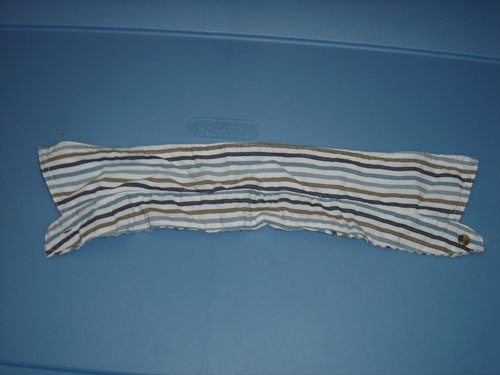
other than the little strip of fabric trimmed off from straightening the side seams, this is all you will have left over. (most efficient recycling, isn't it?)
then you just gather the top edge and sew on a strip of coordinating or contrasting fabric for the tie. presto! instant apron!! :-)
and best of all, the hem is already done for you!! does anyone else have such a hard time with sewing hems as i do?
Tuesday, February 16, 2010
big birds


hawks, two of them, visited my backyard this morning... they let me get a lot closer than usual.
(not sure why blogger has to rearrange the order of the photos, but there you have it)
Saturday, October 24, 2009
little birds


the maple tree in our backyard is full of these little guys. does anyone know what they are?
Saturday, September 19, 2009
this about sums it all up
from my other blog:
http://mamaboogie.gaia.com/blog/2009/9/what-experiences-do-you-think-are-important-for-children-to-have#comments
What experiences do you think are important for children to have?
http://mamaboogie.gaia.com/blog/2009/9/what-experiences-do-you-think-are-important-for-children-to-have#comments
What experiences do you think are important for children to have?
Posted on Sep 19th, 2009 by  boogie
boogie This is in Response to the Questions and Reflections for September 18, 2009:
to play in the rain and the mud.
icecream for breakfast.
pony rides.
going to art museums.
the companionship of animals.
putting their feet in the ocean.
the poem aside, there is only one thing children need, and that is to make their own decisions. we maybe can guide them and help them figure out what is best, but we can't make their decisions for them. what children need is for grownups to realize this simple fact. if we set the children free, the entire world will follow. this i believe with all my heart. every mother knows good and well that babies are not born evil, they have to be taught how to do evil things. children know the difference between right and wrong, they don't need us to tell them what to do. they really don't. it's the ones who have been abused, never allowed their own choices to make, that don't know the difference between right and wrong. if we don't allow them to ever follow their heart, they will grow into adults who are unable to hear the truth their heart speaks to them.
the most important lesson i learned from my childhood was that when the pain gets too much, that's when the angels come. the most important lesson i learned as a parent was that it's the same abuse that causes the pain that makes them go away in the first place.
icecream for breakfast.
pony rides.
going to art museums.
the companionship of animals.
putting their feet in the ocean.
the poem aside, there is only one thing children need, and that is to make their own decisions. we maybe can guide them and help them figure out what is best, but we can't make their decisions for them. what children need is for grownups to realize this simple fact. if we set the children free, the entire world will follow. this i believe with all my heart. every mother knows good and well that babies are not born evil, they have to be taught how to do evil things. children know the difference between right and wrong, they don't need us to tell them what to do. they really don't. it's the ones who have been abused, never allowed their own choices to make, that don't know the difference between right and wrong. if we don't allow them to ever follow their heart, they will grow into adults who are unable to hear the truth their heart speaks to them.
the most important lesson i learned from my childhood was that when the pain gets too much, that's when the angels come. the most important lesson i learned as a parent was that it's the same abuse that causes the pain that makes them go away in the first place.
Tuesday, September 15, 2009
my blog is full
i don't update this blog regular anymore. not since i started feeling done with this one and went to zaadz. then i let the trolls freak me out and i deleted that blog, but then made a new one there (same website, new name, gaia). now that one's feeling full, too. i'm not saying anything new anymore.
adding more posts at this point would just be fluff.
adding more posts at this point would just be fluff.
Subscribe to:
Posts (Atom)

 Posts
Posts

